A boy from Missouri whose face has earned more than Luxembourg. We investigate how one jawline became a global economy.
- Subject
- Brad Pitt
- Filed by
- Trumpery Times Desk, Aug 15, 2025
- Reading time
- 29 min
- Believability
- Suspiciously handsome
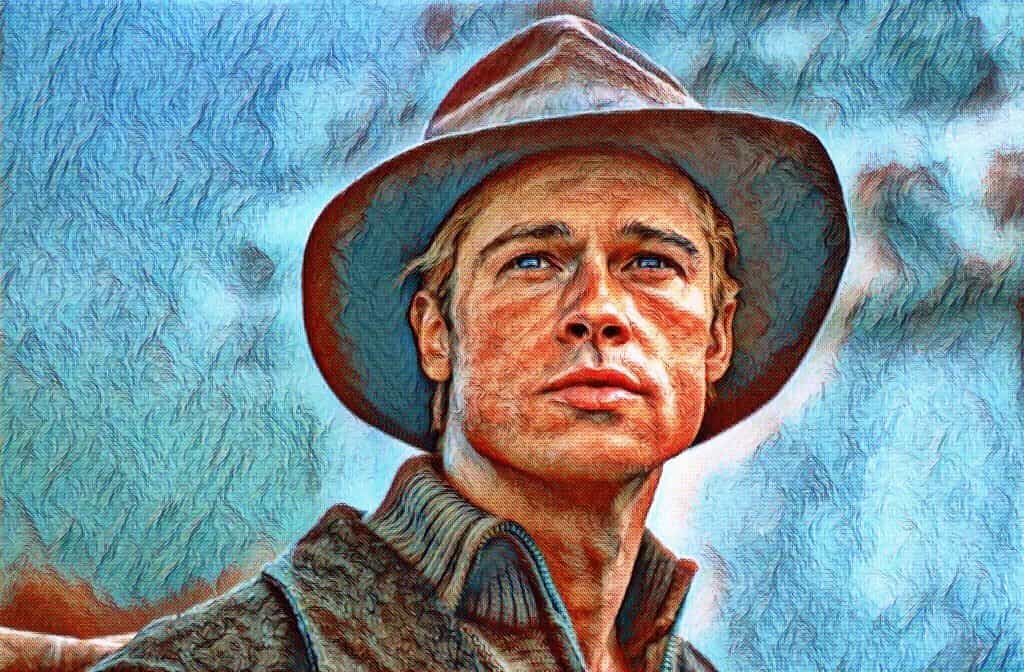
The Brad Pitt Chronicles: Blockbusters, Breakups & Beyond
What happens when fate sweeps a young man from Missouri and says, “$15 is what you’re going to generate each time someone sees your face in a darkened cinema”? A man named William Bradley Pitt, whose mere presence has generated $9.3 billion at the worldwide box office. That’s not a typo. We’re discussing Luxembourg’s GDP simply because humanity decided this single man deserved our undivided attention.
Born on December 18, 1963, in Shawnee, Oklahoma, Pitt grew up in Springfield, Missouri—”‘Mark Twain country, Jesse James country'”—where entertainment involved staring at a field of corn until you convinced yourself you saw it grow. His father owned a trucking company, his mother was a school counsellor, and teenage Brad was perhaps the only member of the golf team plotting a Hollywood takeover. Because if you grow up among “a lot of hills, a lot of lakes”, global movie stardom is obviously the logical career path.
This wasn’t fame by accident. He mapped out his ascent, beginning with perhaps Hollywood’s smartest investment: thirty seconds of shirtless screen time in Thelma & Louise (1991). One battered cowboy hat, one strategic smile, and American women had a new cultural obsession. ROI? Through the roof.
Then came the sustained assault on the entertainment industry. A River Runs Through It made him the thinking woman’s pin-up. Legends of the Fall proved he could brood for hours. Interview with the Vampire confirmed he could play the immortal while looking the part. Then came Se7en and Fight Club, where he delivered, “The first rule of Fight Club is that you do not talk about Fight Club,” while resembling a marble statue with insomnia and impeccable abs.
As if acting weren’t enough, Pitt founded Plan B Entertainment in 2001. Being impossibly handsome and critically acclaimed apparently still left room for producing Oscar-winning films. He earned a Best Picture Oscar for 12 Years a Slave, proving superstardom, production, and philanthropy could somehow coexist.
Finally, in 2019, Pitt secured his first acting Oscar for Once Upon a Time in Hollywood, playing a stuntman with such effortless cool that you could swear he emerged from the womb wearing aviators and driving a vintage Mustang.
Then came the cultural phenomenon of his private life. Twice – 1995 and again in 2000 – People magazine named him the Sexiest Man Alive. His romantic history generated enough drama to sustain the journalism industry of a small country: Jennifer Aniston, Angelina Jolie, six children, and enough paparazzi photos to rebuild the Hollywood sign out of magazine cuttings.
And all of this began with one Missouri kid who believed films were “a portal into other worlds” and had the nerve – or perhaps the imagination – to leave college just two weeks before graduation in pursuit of that portal. He traded small-town ambitions for Hollywood, studied acting, worked hotel and restaurant jobs, and learned from the performances of Gary Oldman, Sean Penn, and Mickey Rourke.
From the golf team at Kickapoo High School to Hollywood’s A-list – a career path that would leave even the most experienced careers adviser speechless. Sometimes fate doesn’t just knock. It kicks the door open, rearranges the furniture, and discovers an unemployed future movie star.
When Talent Meets Opportunity: A Career Study

The Making of a Hollywood Icon: Early Career Stumbles (1987-1993)
Ever wondered what it feels like to be devastatingly handsome and completely unaware your future holds global superstardom? Ask Brad Pitt in 1987: wide-eyed, broke, and wondering whether Los Angeles would become his greatest mistake or his destiny.
His screen career began like most aspiring actors’—with roles so small audiences wondered, “Wait… was that Brad Pitt?” Hollywood’s answer to Where’s Waldo?, except Waldo happened to be impossibly handsome. He debuted on NBC’s Another World in May 1987 with just two episodes, followed by appearances in Trial and Error, Growing Pains, Dallas, and 21 Jump Street. Four episodes on Dallas might sound minor, but in soap opera terms, that was practically a lifetime commitment.
Then came cruel timing. The Dark Side of the Sun (1988), Pitt’s first starring role, was shelved because of the Serbo-Croat War, leaving a future star waiting nearly a decade before the film resurfaced. In the meantime, he kept grinding through guest appearances on shows like Head of the Class and Thirtysomething, becoming Hollywood’s favourite “isn’t that the guy from…?” before landing a Levi’s advert and proving even clothing brands understood his appeal.
Everything changed in 1991 with Ridley Scott’s Thelma & Louise. As J.D., Pitt’s brief appearance became the role that launched him into the stratosphere. His chemistry with Geena Davis transformed him from struggling actor into a full-blown sex symbol almost overnight.
Hollywood success, however, rarely follows a straight line. Johnny Suede and Cool World disappointed critics, before Robert Redford’s A River Runs Through It (1992) changed everything. Ironically, Pitt later called it his worst performance, yet it became the film that established him as a serious leading man. Sometimes the role you doubt becomes the one that defines you.
He raised his game further in 1993 with Kalifornia, playing serial killer Early Grayce. Peter Travers praised his ability to shift from “boyish charm” to genuine menace, while his appearance as stoner Floyd in True Romance gave audiences one of his most memorable comic performances.
By the end of the year, Pitt received the ShoWest Award for Male Star of Tomorrow. After years of small roles, stalled projects, and almost making it, the waiting was over. Tomorrow had finally arrived—and Hollywood was about to discover exactly what it had been waiting for.

Breakthrough Roles: From Vampire Flop to Golden Globe Glory (1994-1998)
It’s 1994, and Hollywood hands Brad Pitt some fangs and says, “Go bite Tom Cruise’s neck.” The result: Interview with the Vampire, where Pitt played Louis de Pointe du Lac alongside Cruise, Kirsten Dunst, Christian Slater, and Antonio Banderas. You’d think eternal suffering would suit a man famous for brooding, but critics were less convinced. While he won two MTV Movie Awards, the Dallas Observer argued that Pitt excelled at charm and confidence but struggled when Louis required genuine “inner torment.” Apparently, centuries of vampire misery needed more than a perfect jawline.
But Pitt quickly proved he was more than a pretty face with Legends of the Fall (1994), playing Tristan Ludlow opposite Anthony Hopkins. Set against the American West and based on Jim Harrison’s novel, the film allowed him to trade vampire anguish for sweeping romantic tragedy. This time critics were far kinder, with Janet Maslin of The New York Times praising Pitt’s “diffident mix of acting and attitude” and recognizing that his growing star power was becoming impossible to ignore.
Then came Se7en (1995), the film that permanently damaged the reputation of mysterious cardboard boxes everywhere. As Detective Mills alongside Morgan Freeman, Gwyneth Paltrow, and Kevin Spacey, Pitt entered a world so bleak that vampire movies suddenly seemed cheerful. More importantly, he finally escaped the “pretty boy” label. Variety praised his “resolved, energetic, credible” performance, while the film’s $327 million global box office proved audiences were buying more than just his cheekbones.
Within hours, Terry Gilliam recruited him for 12 Monkeys as the unstable anarchist Jeffrey Goines. Suddenly, the industry saw what had been hiding beneath the good looks: genuine unpredictability and range. Janet Maslin called the performance “startlingly frenzied,” and Pitt earned both a Golden Globe win and his first Academy Award nomination. Not bad for someone who had recently been accused of lacking emotional depth.
He followed with Sleepers (1996) and The Devil’s Own (1997), the latter remembered almost as much for his questionable Irish accent as for the film itself. Critics debated the performance, but the movie still earned $140 million worldwide, proving that even a shaky brogue could not dent Pitt’s box-office power.
Later that year, Seven Years in Tibet saw Pitt literally climbing mountains – training in California and the Alps to play Austrian mountaineer Heinrich Harrer. It was the kind of commitment that suggested he was willing to suffer for authenticity, even if the suffering involved a great deal of altitude.
The decade ended with Meet Joe Black (1998), where Pitt played Death itself. Critics were divided, with Roger Ebert calling it a miscalculation, but the ambition was undeniable. This period marked Pitt’s transformation from Hollywood heartthrob into a serious performer willing to gamble on strange, difficult roles. From vampires and westerns to serial killers and supernatural beings, he spent the 1990s proving that his greatest talent was not being beautiful – it was refusing to be predictable.
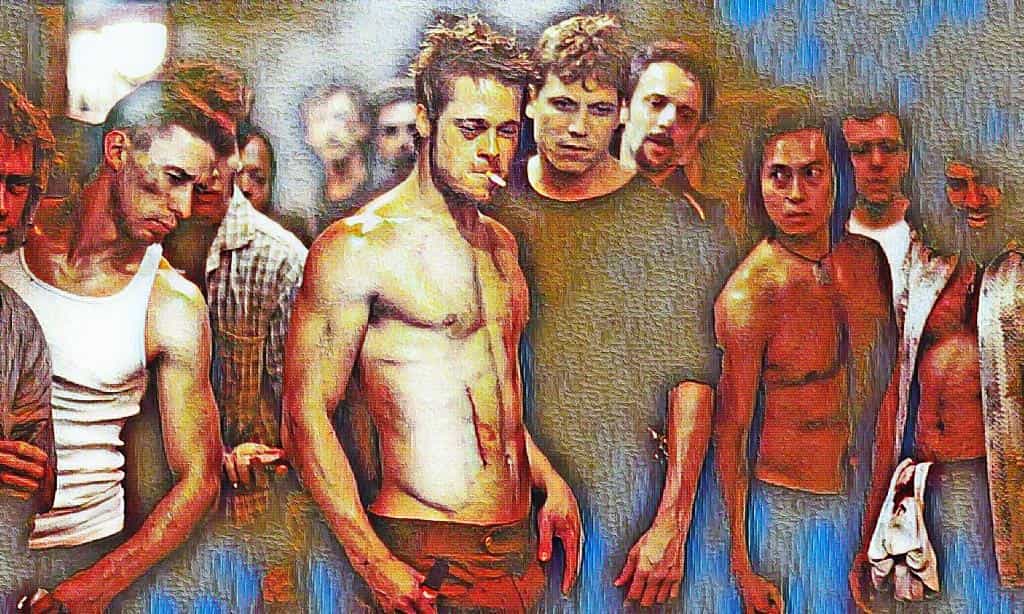
The Rise of Brad Pitt: Fight Club Teeth to Ocean’s Millions (1999-2003)
Imagine this: it’s 1999, and Brad Pitt is allowing strangers to chip away fragments of his perfectly shaped teeth. Why? Because David Fincher calls and says, “I want you to become Tyler Durden,” and apparently the only acceptable response is, “How many teeth must be sacrificed for art?”
That was the beginning of perhaps the greatest reinvention of Pitt’s career. He had spent years escaping the “pretty boy” label, but Fight Club was his declaration of war on typecasting. Here was Hollywood’s golden boy learning boxing, taekwondo, and wrestling, transforming himself from the human equivalent of a luxury advertisement into a philosophical chaos merchant for lost souls everywhere.
Critics were divided on the film itself, but Pitt’s performance received almost universal praise. CNN’s Paul Clinton admired its “risky but successful nature,” while Variety described Pitt as “cool, charismatic and more physically dynamic” than ever. Although the film initially struggled at the box office, Fight Club eventually became a cult phenomenon with a following more devoted than many actual cults.
Not content with one physically demanding, accent-heavy role, Pitt followed it with Guy Ritchie’s Snatch, playing an Irish Traveller boxer whose accent was so incomprehensible that even native speakers might have needed subtitles. Clearly, Pitt looked at his career and thought, “I’ve conquered being handsome. Now let’s make everyone question whether I can speak English.”
The San Francisco Chronicle’s Mick LaSalle argued that Pitt had once been “shackled” by roles requiring brooding introspection. A cruel fate, perhaps, for a man whose entire early career involved looking beautiful while contemplating existence. But LaSalle had a point: Pitt had found a new home in “black comic outrageousness and flashy extroversion.” The secret was simple: stop hiding behind the image and embrace the strange.
That philosophy continued with The Mexican (2001), a romantic crime comedy that received mixed reviews but showed Pitt’s willingness to experiment. Then came Spy Game, where he reunited with Robert Redford for a stylish $143-million-grossing thriller built on espionage, tension, and two generations of effortless cool sharing the screen.
Perhaps the most amusing moment came with his appearance on Friends as a character who hated Rachel Green, played by his real-life wife Jennifer Aniston. Turning up at your spouse’s workplace to insult their character is not method acting – it’s method marriage. The performance earned him an Emmy nomination.
The decade closed with Ocean’s Eleven, where Pitt joined George Clooney, Matt Damon, and Julia Roberts for one of Hollywood’s slickest heists. The film earned $450 million worldwide, proving that sometimes the smartest move is simply putting talented people together and letting the chemistry do the heavy lifting.
And because Pitt has never been afraid of absurdity, he rounded out the era by appearing in a gorilla costume on Jackass and lending his voice to animated projects. Nothing says versatility quite like moving from philosophical anarchist to cartoon character without missing a beat.
What made this period remarkable was not simply the success—it was the willingness to embrace the ridiculous, take risks, and refuse to let audiences settle on one version of him. Pitt’s greatest reinvention was not becoming someone else. It was finally allowing the world to see everything he could already do.

How Brad Pitt Became the World’s Favorite Leading Man (2004-2008)
How does one react when the world’s most bankable face spends four years proving he’s more than eye candy? From 2004 to 2008, Brad Pitt delivered a masterclass in transformation – moving from ancient warriors to reverse-ageing enigmas with the confidence of someone who has never heard the phrase “stay in your lane.”
He began with Troy (2004), rehearsing sword choreography for six months before injuring his actual Achilles tendon during filming. The irony was almost too perfect: a man playing one of history’s greatest warriors suffering the same infamous vulnerability as his character. Stephen Hunter of The Washington Post praised his commanding performance, but even Homer might have appreciated that twist of fate.
The film also launched Plan B Entertainment, the production company Pitt founded with Jennifer Aniston and producer Brad Grey. It was more than another blockbuster – it was a statement of ambition. Pitt was no longer just a star selling tickets; he was becoming a producer capable of bringing major stories to life.
That December, Ocean’s Twelve reunited him with George Clooney, with CNN’s Paul Clinton calling their chemistry “the best male chemistry since Paul Newman and Robert Redford.” Their effortless banter turned deception into an art form, while the film’s $362 million global box office proved audiences loved watching Pitt’s Rusty Ryan operate with effortless confidence.
Then came Mr. & Mrs. Smith (2005), which transformed a dark comedy about married assassins into one of Hollywood’s biggest cultural events. The Star Tribune noted that despite its “haphazard” plot, the film succeeded through its “gregarious charm, galloping energy, and the stars’ thermonuclear screen chemistry.” That chemistry became even more famous when Pitt’s relationship with Angelina Jolie became a worldwide obsession. The film’s $478 million box office success confirmed that audiences could not resist watching two impossibly charismatic stars try to destroy each other.
But this was also when Pitt began pushing himself even more artistically. Babel (2006), Alejandro González Inarritu’s sprawling multi-narrative drama, reunited him with Cate Blanchett and earned praise for his performance. Pitt later called the role one of the brightest moments of his career, fitting for a filmmaker known for ambitious risks. The film moved from Cannes acclaim to Oscar recognition, earning seven nominations and winning the Golden Globe for Best Drama.
Meanwhile, Plan B produced The Departed, which won Best Picture at the Oscars. Pitt was credited as a producer, although Graham King received the official award recognition – a reminder that Hollywood success often involves complicated backstage politics. Sometimes the biggest contributions happen away from the spotlight.
Ocean’s Thirteen arrived in 2007, completing the trilogy with $311 million worldwide. Perhaps less explosive financially, but Pitt’s Rusty Ryan had elevated eating on the run into a strangely impressive art form. Who knew chewing could have technique?
His greatest performance of the period, however, came in The Assassination of Jesse James by the Coward Robert Ford (2007). Directed by Andrew Dominik for Plan B and based on Ron Hansen’s novel, Pitt portrayed the legendary outlaw with what Film Journal International called a “scary and charismatic” presence. He won the Volpi Cup for Best Actor at the Venice Film Festival.
In 2008, the Coen Brothers brought Pitt into their world with Burn After Reading, where his performance as a clueless gym employee became one of the film’s highlights. Seeing Hollywood’s golden boy stumble through absurd comedy was like discovering a hidden talent you never knew existed.
Finally came David Fincher’s The Curious Case of Benjamin Button. Playing a man ageing backwards is hardly conventional acting preparation – how does one even rehearse that? Yet Michael Sragow of the Baltimore Sun praised Pitt’s “sensitive” performance in a “timeless masterpiece.” The role earned him his first Screen Actors Guild nomination, fourth Golden Globe nomination, and second Oscar nomination.
The film earned thirteen Oscar nominations and grossed $329 million worldwide. So what defined this remarkable four-year stretch? Pitt had played warriors, criminals, outlaws, comedians, and time travellers with equal conviction. Critics celebrated his range, audiences continued to show up, and awards bodies recognised his evolution.
The secret to Pitt’s longevity was never simply his charisma. It was his willingness to risk looking foolish, strange, or vulnerable in pursuit of something better. In a world where most of us are simply trying to age gracefully, there is something strangely comforting about watching someone do the impossible – and somehow make it look effortless.
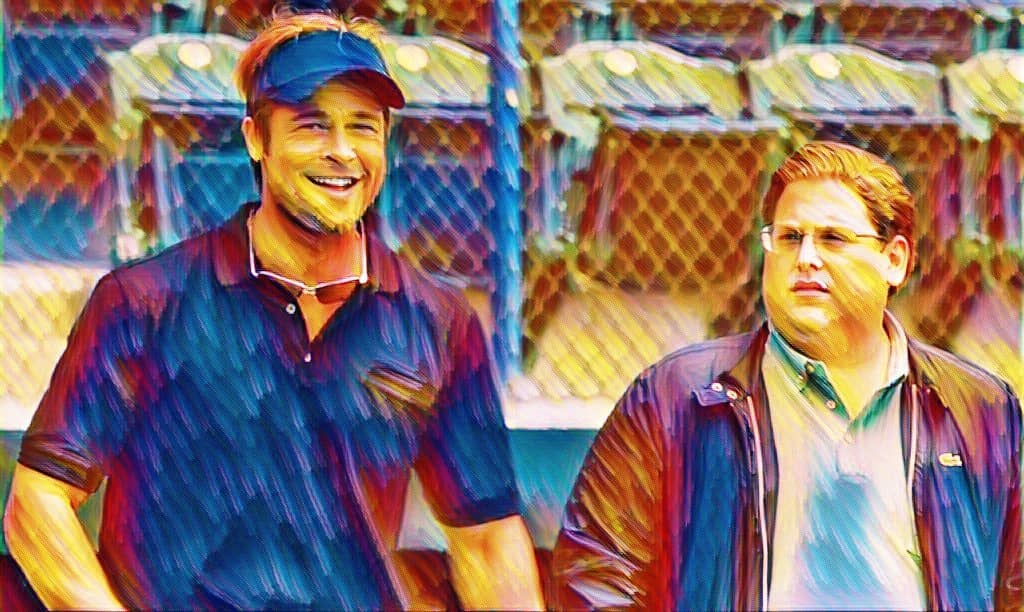
Brad Pitt’s Billion-Dollar Decade: From Cannes Winner to Box Office Gold (2009-present)
Hollywood’s golden boy made a decision late in 2009: being cute was no longer enough. He needed to do something. Really do something. Not just stand around looking heartbreakingly handsome while explosions happened behind him—Brad Pitt had bigger ambitions than simply relying on his gene pool.
Enter Tarantino’s Inglourious Basterds, where Pitt played Lieutenant Aldo Raine, the swastika-burning, drawling American whose accent was thick enough to spread on toast. Watching him storm through scenes with trademark confidence raised an important question: is there anything this man cannot make look cool? Even revenge-fuelled violence somehow appeared stylish in his hands. The film earned $311 million worldwide, proving audiences were eager to watch Pitt carve his way through history with a grin.
Then came a seemingly random detour: Megamind, where Pitt voiced superhero Metro Man. Nothing says “serious actor reinvention” quite like lending your voice to a children’s animation, but somehow it worked. His range was becoming almost absurd—like watching someone turn fast food into fine dining.
In 2011’s Moneyball, Pitt shifted from battlefield swagger to baseball statistics, portraying Oakland Athletics general manager Billy Beane and making spreadsheets look strangely dramatic. The Academy noticed, earning him an Oscar nomination for transforming “on-base percentage” into something almost poetic. Only Brad Pitt could make math feel like a character study.
His fascination with war continued in Fury (2014), where he played tank commander Don “Wardaddy” Collier navigating the brutal psychology of combat. The film earned $211 million worldwide, while Pitt’s producing career continued flourishing. 12 Years a Slave won him a Best Picture Oscar as a producer, and The Big Short somehow made the 2008 financial crisis understandable to people who normally avoid economics entirely. His talent seemed to be finding films that could satisfy both critics and audiences.
Allied (2016) returned him to wartime romance, this time as an assassin opposite Marion Cotillard’s French spy. The film questioned whether love could survive deception – a fitting premise for an actor whose career was built on convincing audiences of impossible things. Although critics questioned the story, Pitt committed fully to the emotional stakes.
The remarkable thing was watching a man who once succeeded through sheer charisma become someone who could elevate almost any material. In Moneyball, he captured the tension between logic and emotion. In Fury, leadership was not just shouting orders—it was the burden of survival, impossible decisions, and the moral compromises that followed soldiers home.
This was not a Hollywood transformation montage. It was slower, like watching someone quietly master a skill until one day you realised they were doing something extraordinary without even appearing to try.
Perhaps that was the defining difference between artists who endure and those who simply become monuments to their past success. Pitt was willing to risk looking strange, uncomfortable, or even ridiculous in pursuit of something better. This period proved that commercial success and artistic credibility were not opposites – and that the most interesting stars are the ones still willing to surprise you.

The Philanthropist Who Builds Houses and the Activist Who Builds Hope
You’re Brad Pitt in 2004, fresh off your biggest blockbuster. What’s next? Vegas? Another motorcycle? Not exactly. You head to Missouri to rally college students about politics. Because nothing screams Tinseltown glamour quite like campus activism in Flyover Country.
Most actors spend their fortunes and disappear into their chateaus. But Pitt? He looked at his success and apparently thought, “This requires more purpose.” And he delivered exactly that.
Consider his sudden involvement in the stem-cell debate. In October 2004, Pitt lobbied for funding of embryonic stem-cell research with remarkable enthusiasm. “We must make sure that we open these doors so our best and brightest can go out there and discover these cures,” he declared. Most actors play doctors on screen and call it a day. Pitt apparently wanted to take method acting into the realm of actual medical research.
And that became his recurring obsession: a midlife crisis with unusually high ideals. While others buy sports cars, Pitt studied computer-aided design. What makes someone look back on a wildly successful Hollywood career and think, “That’s nice, but sustainable building techniques – now that’s where the excitement is”? He even wrote a source book on the Blacker House in 2000, so committed was he to going beyond celebrity fantasy.
Hurricane Katrina provided the next chapter with his Make It Right Foundation. Walking through New Orleans’ devastated Ninth Ward, Pitt decided donations weren’t enough – the solution required a housing revolution. He brought together 13 architectural firms and invested $5 million of his own money to build 150 sustainable, affordable homes.
The foundation’s influence grew so much that in 2009, Pitt met with House Speaker Pelosi and President Obama to discuss federal funding for green housing projects. One can only imagine the conversation: “So, somewhere between Fight Club and Ocean’s Eleven, how exactly did you discover sustainable urban planning?”
Meanwhile, his work with Angelina Jolie created what was effectively a charitable empire. Their Jolie-Pitt Foundation, established in 2006, went far beyond typical celebrity philanthropy. They invested $8.5 million initially and donated $2.4 million in the first year, followed by $3.4 million annually in 2007. These were not symbolic gestures — they had built a serious humanitarian operation.
Their charitable contributions read like a global emergency checklist: $1 million each to Doctors Without Borders and Global Action for Children, $100,000 to the Daniel Pearl Foundation, $1 million for Pakistani victims of Taliban repression, and another million for Haiti earthquake survivors. Pitt approached global issues with a level of discipline most people reserve for remembering to buy groceries.
His stance on gay marriage also showed his ability to combine his sincerely held personal beliefs with political action. He told Esquire magazine in 2006 that he wouldn’t marry Jolie until marriage was open to all Americans, despite their sexuality. Try explaining that principled position to your relationship therapist. He backed that belief with a $100,000 donation against California’s Proposition 8 and participated in a staged reenactment of the trial that ultimately overturned the state’s gay marriage ban.
Pitt’s trajectory has never been defined simply by the variety of his many interests, but also by the intensity of his commitment. This was not a celebrity dabbling in causes for publicity – it was someone who took his wealth and influence seriously and asked, “What can I actually do with this?” Whether producing documentaries about global health issues or studying architectural design, he brought the same dedication he brought to acting.
The next time you see him on screen, keep this in mind: you’re not just watching an actor. You’re watching someone who decided that greatness and doing good did not have to be separate ambitions. And honestly? Being Brad Pitt might be his greatest role yet.
So what drives a man to go from silver screen icon to accidental renaissance man? Perhaps it’s the realization that lasting happiness comes not from what you accumulate, but from what you give away.
Brad Pitt Privately

The Brangelina Chronicles: From Aniston to Jolie, 7 Women, 3 Divorces, 1 Pattern
So Brad Pitt comes to Hollywood, and what does he do? He methodically dates his way across movie sets like he’s conducting some very expensive, prestigious social experiment. What exactly is his plan here? Is there an unofficial clause in his contracts that he must have a romantic storyline with his female co-star?
Let’s start at the beginning. Picture a young Brad in the late ’80s: that innocent face, paired with an all-you-can-eat buffet appetite – sampling a little bit of everything on the menu. Shalane McCall from Dallas, Robin Givens from Head of the Class, Jill Schoelen from Cutting Class. He’s collecting romances like baseball cards, except they’re cards that can act… and apparently can’t resist that jawline.
And then comes the uncomfortable part – McCall and Juliette Lewis were minors when their relationships with Pitt began. What do you say to that? “Different times”? Naturally, this is Hollywood, where the only thing more flexible than the moral compass is a Malibu yoga instructor and it’s a moral circle that remains unsquared.

Then came Gwyneth Paltrow, and suddenly we’re playing in the big leagues. It was like moving from community theatre to Broadway in a heartbeat – the same acting, a bigger audience, ever more expensive costumes. Their romance was so ’90s it almost hurt: golden couple, golden hair, golden smiles. They became engaged, America fell in love, and then, suddenly, they disappeared faster than a decent parking spot in Beverly Hills. Everything that could go wrong did. And no one really knows why. Perhaps she suspected he would move on to the next co-star like a method actor taking his craft far too seriously.
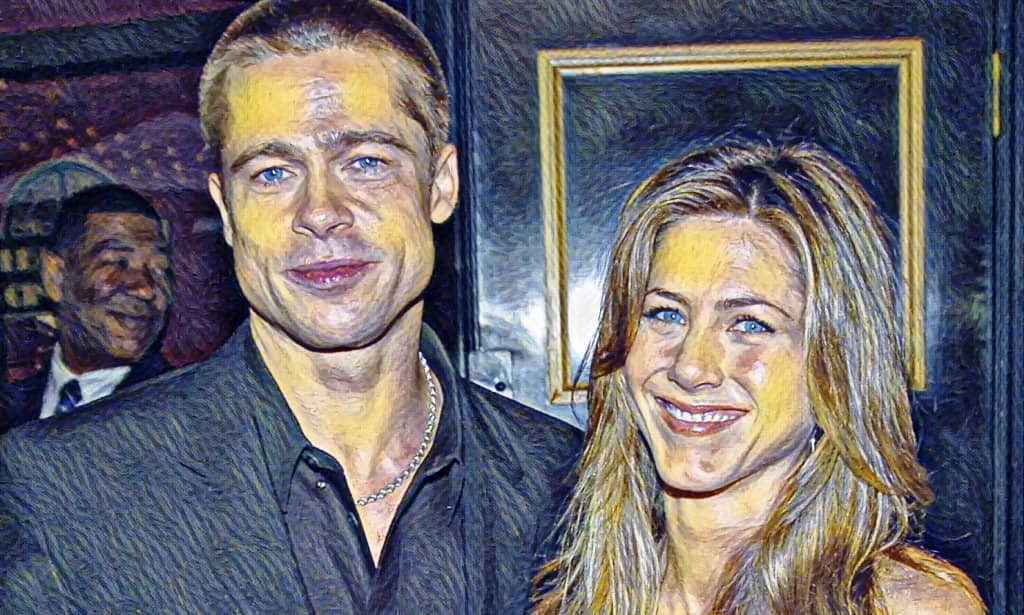
Then came Jennifer Aniston, and suddenly we entered prime-time celebrity romance. This wasn’t just dating – this was a national investment. America wasn’t merely hoping they’d last; we demanded it. Their 2000 wedding was the celebrity Super Bowl. A million-dollar wedding budget? For one day? I’ve spent far less on my car, and I’ll get far more mileage out of it! Brad and Jen lasted just five years too – apparently the standard warranty period for Hollywood fairytales.
When they announced their divorce in 2005, it was like discovering Santa had outsourced Christmas to Amazon. “Irreconcilable differences” – what does that even mean? He squeezes the toothpaste in the middle? She pronounces “gif” differently? Give us something dramatic!
But wait, there’s more! Before the ink on the divorce papers had even dried, Brad was snapped on a Kenyan beach with Angelina Jolie and her kid. The whole was so perfectly timed you might have suspected a conspiracy from the writers of Mr. & Mrs. Smith. Oh wait – that’s where they met. How convenient. It’s like ordering a pizza one night and discovering the delivery driver is your long-lost soulmate. What are the odds, eh?
And so, “Brangelina” was born – because what could spell true love better than a catchy portmanteau that sounds sort of like prescription meds? “Side effects may include adopting children from several continents and turning your house into a UN summit.” The Brangelina clan expanded in the same way others collect air miles, circling the globe with an entourage large enough to require its own zip code.
It took them seven years before they got engaged. Seven! I’ve seen faster examples of coastal erosion…Finally, they got married in a French château in 2014, because apparently ordinary venues don’t provide the optimum dramatic backdrop for future divorce.
And then, in 2016, along came “irreconcilable differences” once again. Only this time with added Hollywood drama: custody battles, courtroom squabbles over the vineyard, and accusations that flew around like confetti at the world’s most expensive New Year’s party. They couldn’t even split up without it involving a vineyard. Most couples argue over furniture; they were fighting over children and a fine wine-producing empire . How very Tinseltown.
By 2022, Pitt was dating Ines de Ramon, a jewellery executive. You have to admire the consistency. Successful? Check. Attractive? Check. Connected to entertainment? Check. It seems he has a type: “someone ridiculously photogenic with an interesting career to discuss at cocktail parties to boot.”
So what’s the verdict on Brad’s tumultuous love life? It’s a romantic game of musical chairs where the music never stops, the chairs are worth millions, and there are always cameras nearby. In a city built on fantasy and impossible dreams, maybe reality is allowed to have a little fun too.
From Jolie-Pitt to Just Jolie: When Kids Choose Sides in Divorce
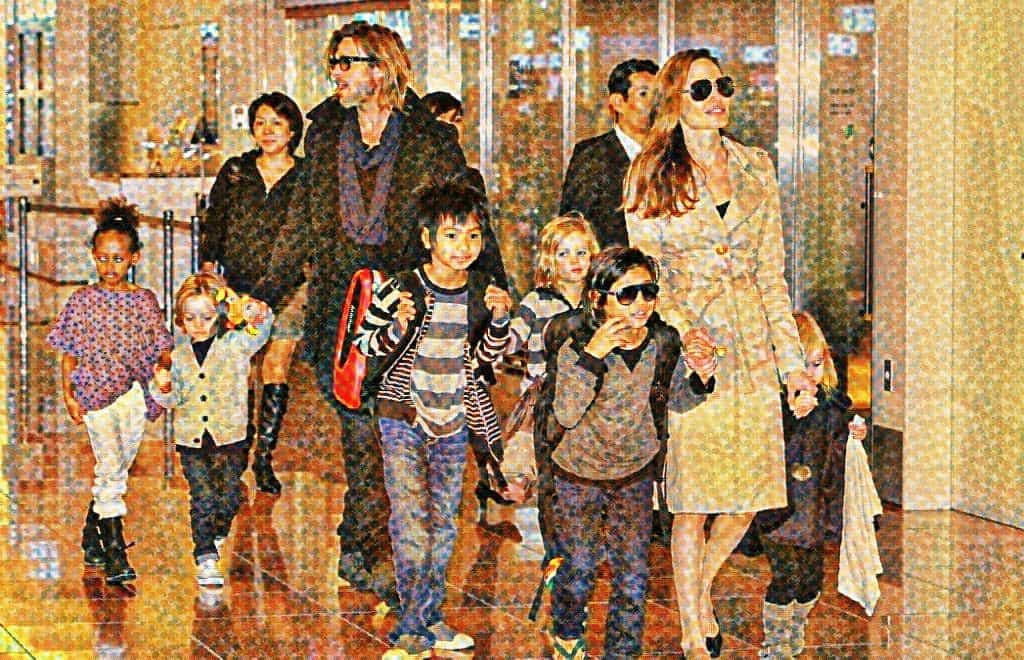
Let me get this straight: we live in a world where a baby’s photographs can buy a house, yet we’re expected to ignore the fact that they exist? The Brangelina saga isn’t just a Hollywood tabloid story – it’s a real-time sociology experiment, with the subjects conveniently being some of the most photographed children on Earth.
Now picture this: it’s 2005, and Brad Pitt’s way of bonding with his new girlfriend is travelling to Ethiopia and bringing home a child. Most couples argue over whose turn it is to load the dishwasher. These two? They’re rescuing children from different continents like they’re completing an international scavenger hunt. “Honey, we’ve covered Asia and Africa – have we considered South America yet?” It’s like parenthood was part of some UN humanitarian agenda now.
And then there’s the price tag. Forty-one million dollars for coverage of Brangelina’s growing brood. Forty-one million?! I’ve seen people negotiate harder over a five-dollar garage-sale lamp, yet the world somehow decided celebrity baby photos were worth more than the GDP of some countries? What exactly were people paying for? The privilege of seeing a famous baby’s face? Spoiler alert: it’s a baby – they all look the same.
And this is where it gets truly bizarre. They created a wax figure of two-month-old Shiloh. A wax figure of a baby. Who approved that? What group of people sat around a table and said, “You know what the world needs? A lifeless replica of an infant”? More importantly, who goes to Madame Tussauds just to gawp at a wax baby?
Fast-forward through all the adoption paperwork, jetsetting, and enough bureaucracy to fill a courthouse, and what’s left? A custody battle that wouldn’t look out of place in the Cold War. Five whole years of litigation. Meanwhile, their children grew up watching their parents’ relationship being torn apart live on TV and splashed across tabloid front pages.
And then there was the timing. Shiloh reached adulthood and, almost immediately, dropped the “Pitt” from her surname. She’d been waiting all those years until she legally could. “Finally! I’m an adult! Now it’s time to edit my name like my Facebook profile!”
Naturally, she wasn’t alone. Vivienne and Zahara followed suit soon after. It was a domino effect – except instead of dominoes, the pieces were ears of simmering family tension and legal documents. Just imagine the family reunion: “Pass the potatoes, please. And, by the way, that’s not my name anymore…”
These children didn’t rebel in the traditional way – no tattoos, no teenage dramatics, no angry slanging matches. They skipped straight to court. They basically said: “I’m gonna make this official. With paperwork. And it’s all on record.” Possibly the most bureaucratic teenage rebellion ever witnessed.
Now just think about Brad Pitt’s position for a second. You spend years building a global family, adopting kids from around the world, appearing in millions of photographs, and then those children grow up and – allegedly – distance themselves from you entirely. It’s like being fired by your own family: “Thanks for everything, Dad. But we’ve decided to go in a different direction. We’ll keep your contact details on file and be in touch if another parenthood opportunity comes up.”
The whole saga raises an uncomfortable question: when your baby photos are worth more than most people’s pensions, when your childhood becomes a wax exhibit, and when family disputes play out on international news — how normal can childhood possibly be? These children couldn’t even visit a playground without paparazzi turning it into a red-carpet event.
And now we’re watching the next generation rewrite their own family story. They have had to revisit their childhoods, weigh their relationships with both parents, and make decisions most people never face. Not through dramatic interviews or public statements, but through quiet legal changes that perhaps speak louder than anything they could say.
The Truth About Brad Pitt: Addiction, Allegations, and Hollywood’s Amnesia
So what’s interesting about Brad Pitt? You have a man for whom a federal investigation somehow became part of the redemption arc. Someone comes to question his parenting abilities — the FBI — and this becomes a turning point in his personal narrative. It’s almost like being audited by the IRS and responding by writing an article on personal finance.
Imagine this: September 2016, roughly 30,000 feet in the air. Brad Pitt is having what you might politely call a “difficult family discussion” aboard a private plane. Most people have arguments on flights and receive little more than annoyed looks from strangers or a warning from the cabin crew. When Brad Pitt has one, federal officials start taking notes. Once you’re famous enough, even your worst parenting moment becomes a government matter.
And naturally, the Los Angeles Department of Children and Family Services couldn’t just sit this one out. Why should the FBI have all the investigative fun? It’s like your neighbor complaining about loud music and suddenly the entire HOA arrives with clipboards.
Fast-forward to 2022, and we’re watching a daytime drama with a budget that no soap opera could imagine. Angelina Jolie’s legal team is presenting claims involving physical altercations, accusations, and complicated agreements. Reading the court documents, you almost think: “This is what happens when two incredibly wealthy people try to separate while owning a French château.” Most exes argue over furniture. These two were fighting over a vineyard. It feels less like a divorce and more like billionaires carving up countries.
And then there were the critics. Writers like Angelica Jade Bastien questioned whether audiences were too willing to overlook past controversies once Pitt delivered another acclaimed performance. But that’s Hollywood’s great trick, isn’t it? One brilliant film, a few thoughtful interviews, and suddenly the public memory resets. “Brad who? Oh, yeah, he was great in Fight Club.”
And that’s the fascinating part. While facing intense scrutiny over his personal life, Pitt also entered recovery and began attending Alcoholics Anonymous. That’s a particularly Hollywood form of multitasking: a federal investigation and a personal reinvention happening simultaneously. Most people would buckle under such pressure, but Pitt somehow turned it all into another chapter of his public persona.
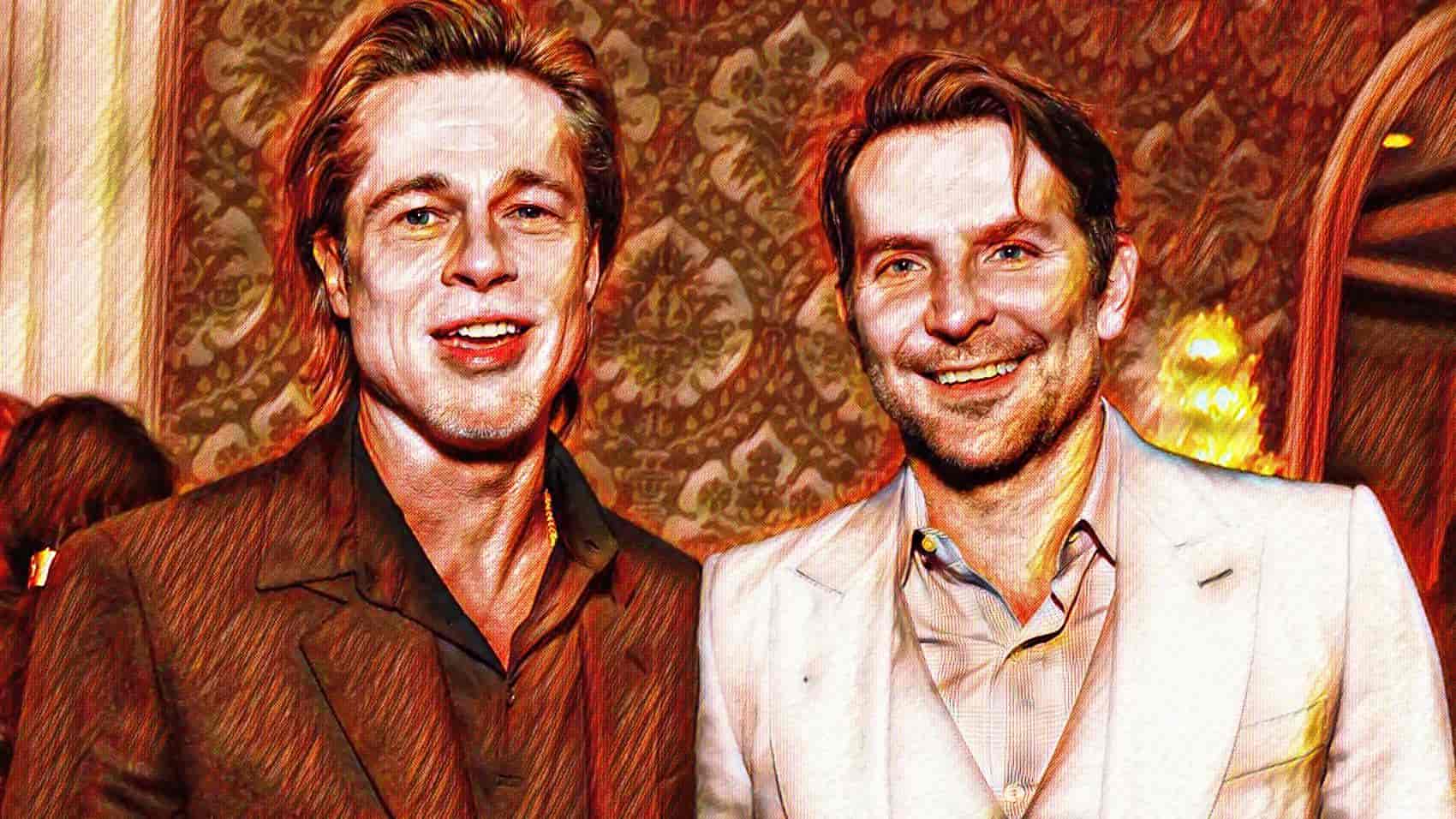
And who supported him during that period? Bradley Cooper, of course. Because in Hollywood, even your recovery partner needs to be handsome and Oscar-nominated. Most people are sponsored by Dave from down the street. Brad Pitt has Bradley Cooper instead.
By 2019, Pitt was writing for Interview magazine, including a conversation about addiction and sobriety with Sir Anthony Hopkins. Two wealthy, famous, Oscar-winning actors discussing their struggles – likely the world’s most expensive therapy session. You read it and think: even their lowest points sound more glamorous than most people’s best days.
But let’s go back to the late ’90s, when Pitt admitted that he struggled with fame by “smoking way too much dope” and “sitting on the couch and just becoming a doughnut.” A doughnut! The man millions of people considered impossibly attractive described himself as doughy and jelly-filled. That’s like Michelangelo looking at the Sistine Chapel and saying, “Ah, just a bit of ceiling work.”
A turning point came during a trip to Morocco, where witnessing extreme poverty forced him to reconsider his own situation. Sometimes it takes travelling halfway around the world to realize that being rich, famous, and miserable on a Malibu sofa really isn’t the dream. It’s the world’s most expensive wake-up call.
This is the strange math of celebrity redemption arcs: scandal + addiction + public scrutiny somehow equals renewed respect and greater success. Hollywood has a unique ability to transform personal struggles into miraculous comeback stories, provided the talent and interviews are good enough.
So the question remains: is this genuine transformation, carefully managed public image, or a combination of both? Perhaps it doesn’t matter to the audience so long as the movies remain compelling and the redemption story at least feels authentic. Because ultimately, we’re all on the outside looking in – observing the rich and famous work through their personal problems in public while we struggle to get our own families to even pick up our calls.
Face Blindness
Imagine you’re one of the world’s most famous faces: you’ve appeared on countless magazine covers, walked on red carpets, and been recognised everywhere – yet you can’t actually identify anyone around you, even at Hollywood parties. Welcome to the strange and twisted irony of Brad Pitt’s world.
In 2022, Pitt revealed his lifelong struggle with prosopagnosia – or, in layman terms, “face blindness”: nature’s cruel joke on a man whose own face became one of the most recognisable on Earth. Though never officially diagnosed, the condition reportedly turned every social situation into a minefield of awkward encounters.
By 2013, Pitt admitted the problem had become so severe that he often avoided social functions altogether rather than risk the embarrassment of not recognizing people. The face that adorned hundreds of movie posters had become trapped in a world where everyone else’s features became a Rorschach test. It was like being a master chef who suddenly loses his sense of taste and smell – genuinely debilitating and cosmically ironic.

Public Persona
So what exactly is Brad Pitt’s public image? A man who built much of his career on being impossibly attractive, occasionally eating things on camera, and somehow convincing everyone that he’s supremely talented too. And yet, we all accepted it.
Let’s examine the evidence. Empire magazine placed him on its “25 Sexiest Stars” list in 1995. Then People named him “Sexiest Man Alive” – twice. Because apparently one year at the apex of attractiveness just wasn’t enough for Brad. It was as if he’d cornered the market on being handsome and it was a monopoly he was intent on maintaining.
Then things got even stranger. Pitt treated being ridiculously good-looking almost like a side project while casually expanding his global influence. Forbes ranked him among the Celebrity 100 for three consecutive years, moving from 20th to 5th to 10th place. Even his star ratings were totally unpredictable.
Time magazine later included him among the world’s most influential people. Why? Because Brad Pitt’s greatest superpower may simply be directing people’s attention to more important matters than fame. He points at something, and millions of people turn to look. “Hey everyone, look over there!” And suddenly the world had his undivided attention.
His films have collectively grossed billions worldwide. Billion, with a B. That’s not just box-office success – that’s the GDP of a small nation. There’s entire economic ecosystem that surrounds the phenomenon known as Brad Pitt.
Then came “Brangelina” – perhaps the ultimate example of celebrity culture turning two household names into a global brand. When Angelina Jolie became pregnant in 2006, Reuters described public interest as reaching “the point of insanity.” Even serious news organisations seemed to admit: perhaps we have collectively lost perspective over two attractive people having children.And they were probably right.
The couple’s efforts to avoid the paparazzi eventually led them as far as Namibia, where one publication described their baby as “the most anticipated since Jesus Christ.” A comparison so dramatic and unhinged it practically demanded a new set of commandments and a total New Testament rewrite.
Two years earlier, when Jolie revealed she was pregnant, reporters camped outside a Parisian hospital for two whole weeks. Fourteen days. Imagine waiting that long in line for a concert ticket, except this event is someone else’s baby. It’s both fascinating and deeply unsettling at the same time.
And perhaps the strangest achievement of all: in 2015, a minor planet was named after him. Planet Bradpitt now exists somewhere out in the solar system as the star exists here on Earth. The man went from Hollywood heartthrob to actual celestial object. At this point, a constellation doesn’t even seem out of the question.
So what explains the strange journey from chiselled movie star to international brand? In an industry where fame often expires faster than fresh milk, Pitt has remained a cultural fixture for more than four decades.
Maybe the real mystery isn’t his success – it’s our inability to become accustomed to watching him make even ordinary things look extraordinary. And that, more than anything, is the definition of stardom.